
A website can contain excellent information and still struggle to perform when its pages are poorly organized. Visitors may have difficulty finding important information, while search engines may have trouble understanding how the pages relate to one another.
Website architecture provides the structure that connects the different parts of a website. It determines how pages are arranged, how visitors move between them, and how search engines discover and interpret the site’s content.
For businesses investing in professional Website Development, architecture should be considered from the beginning. A well-planned structure can support search engine optimization, improve usability, simplify navigation, and make future website updates easier.
The Structure Behind a Website
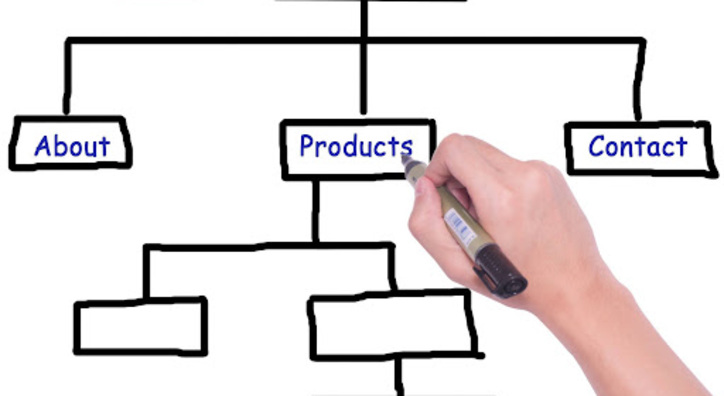
Website architecture refers to the way a website’s pages and content are organized. It includes the relationship between the homepage, category pages, service pages, articles, product pages, and other sections.
A simple business website might have a structure such as:
Homepage → Services → Individual Service
A larger website may have several layers of categories and subcategories.
The goal is to create a structure that makes sense to both visitors and search engines. Pages should have clear relationships, and important information should be reasonably easy to reach.
A confusing structure can make a website difficult to navigate even when individual pages are well designed.
Why Page Hierarchy Matters
Page hierarchy helps establish the importance and relationship of different sections.
The homepage usually sits at the top of the structure. Main service or category pages sit beneath it, followed by more specific pages.
For example, a web design company could organize its services into separate pages for website design, Website Development, website maintenance, and search engine optimization.
This hierarchy gives visitors a clear route through the website. It also provides search engines with useful context about how the site’s content is organized.
Pages should not be buried several levels deep unless there is a practical reason for doing so. Important pages should have clear connections to other relevant pages.
Navigation Shapes User Experience
Navigation is one of the most visible parts of website architecture. Visitors depend on menus and links to understand where they can go.
A well-organized navigation system uses clear labels and logical categories. Someone visiting a business website should be able to identify its main services, learn about the company, locate useful resources, and find contact information without having to search extensively.
Navigation also affects how visitors discover additional content.
A visitor who lands on one service page may want to compare another service or read a related article. Clear internal links provide those routes.
When navigation is consistent across the website, visitors can learn how the site works quickly. This reduces confusion and makes the overall browsing experience more comfortable.
Internal Linking Connects Related Content
Internal links are an important part of website architecture. They connect one page on a website to another page on the same domain.
A useful internal linking system helps visitors find related information. It can also help search engines discover pages and understand relationships between pieces of content.
For example, an article about website planning could link to a relevant Website Development service page. A service page could link to related resources that answer common customer questions.
These links should be relevant to the subject being discussed. Adding links simply to increase the number of internal links can make content harder to read.
The best internal links are useful because they give visitors a sensible next step.
Website Architecture and Search Engine Crawling
Search engines need to discover and access website pages before those pages can be considered for search results.
A logical architecture makes this process easier by creating clear pathways between related pages. Internal links, navigation menus, XML sitemaps, and a sensible URL structure can all contribute to better discoverability.
A website with isolated pages can create problems. If an important page has few or no internal links pointing toward it, visitors may have difficulty reaching it, and search engines may have fewer signals about its place within the site.
This is one reason website architecture should be considered alongside technical SEO rather than treated as a separate design issue.
Keep URLs Clear and Consistent
URL structure is another part of website architecture.
A clear URL can give visitors an immediate idea of what a page contains. It can also provide search engines with additional context.
For example, a URL based on a meaningful page topic is easier to understand than one made up of a long series of unrelated numbers or characters.
URLs should generally be descriptive, concise, and consistent throughout the website. Changing URLs unnecessarily can also create maintenance issues and may require appropriate redirects.
Good Website Development considers URL structure before a large website becomes difficult to reorganize.
Mobile Experience Is Part of Architecture
Website architecture also affects mobile usability.
Visitors using smartphones often interact with websites differently from desktop users. Navigation menus may be condensed, content may appear in a different layout, and buttons need to be easy to tap.
A website can have a logical desktop structure and still provide a poor mobile experience if its navigation is difficult to operate on a smaller screen.
Responsive design helps the same website adapt to different screen sizes. However, responsive design should be planned alongside the information architecture so that important pages remain easy to access across devices.
Mobile usability is especially important for businesses that receive a substantial portion of their visitors from smartphones.
Website Speed and Structural Decisions
Architecture can also influence website performance.
Large websites often contain many images, scripts, plugins, page templates, and third-party resources. Poor organization can result in unnecessary requests and complicated page structures.
A thoughtful development process can reduce unnecessary elements and create cleaner page layouts.
Page speed depends on many technical factors, including hosting, image optimization, code, caching, scripts, and content delivery. Website architecture is only one part of the picture, but it provides the foundation on which many technical decisions are made.
A well-planned structure makes it easier to identify and manage these elements as the website grows.
Architecture Makes Websites Easier to Expand
A website that starts with ten pages may eventually have hundreds.
As content grows, an unclear structure becomes increasingly difficult to manage. New pages may be placed wherever there happens to be space, creating duplicate categories, disconnected content, and inconsistent navigation.
A planned architecture provides a framework for expansion.
New services can be added under an existing section. New articles can be organized within appropriate resource categories. Related pages can be connected through internal links.
This makes the website easier for both visitors and the business owner to understand.
Common Architecture Problems to Avoid
Several structural problems can affect both SEO and usability.
One is excessive depth, where visitors must move through too many levels before reaching important information. Another is orphaned content, where a page has few meaningful internal links leading to it.
Duplicate or overlapping categories can also create confusion. Poorly organized navigation may cause visitors to overlook important services.
Broken internal links and outdated URLs can further weaken the browsing experience.
Regular website reviews can identify these problems before they become difficult to correct.
Build the Foundation Carefully
Website architecture affects almost every part of a website experience. It influences navigation, internal linking, page discoverability, mobile usability, content organization, and the ability to expand the site over time.
For businesses working with Sites by Sara, careful planning during Website Development can provide a stronger foundation for both users and search engines.
A well-structured website does not need to be complicated. Its pages simply need to have clear relationships, useful navigation, sensible URLs, and logical paths between related information.
When architecture is planned properly, visitors can find what they need with less effort, while search engines can more easily understand the site’s content and organization. That combination makes website architecture an important part of creating a useful, accessible, and search-friendly website.


